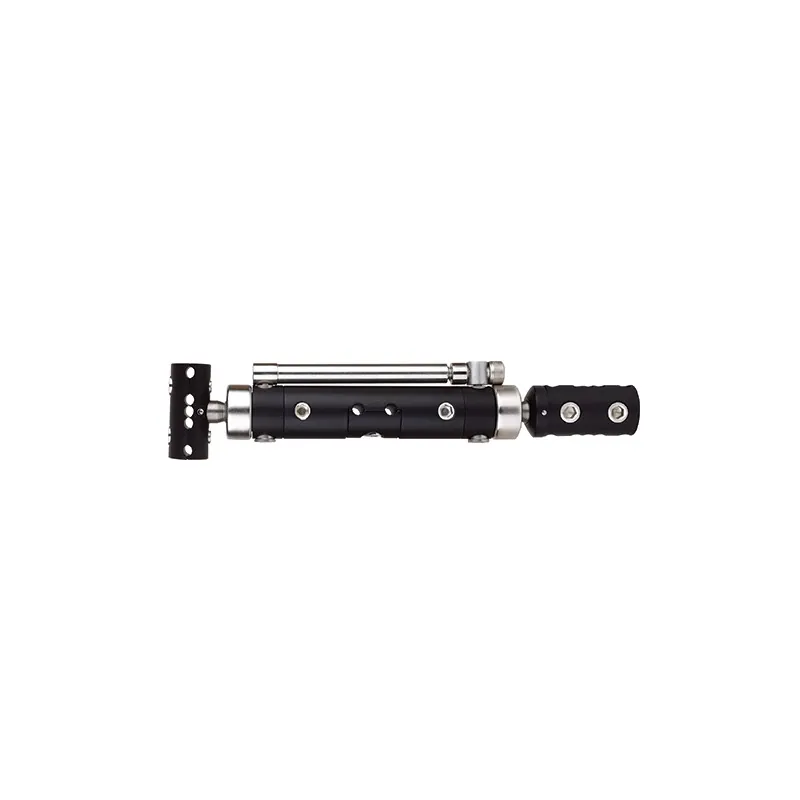
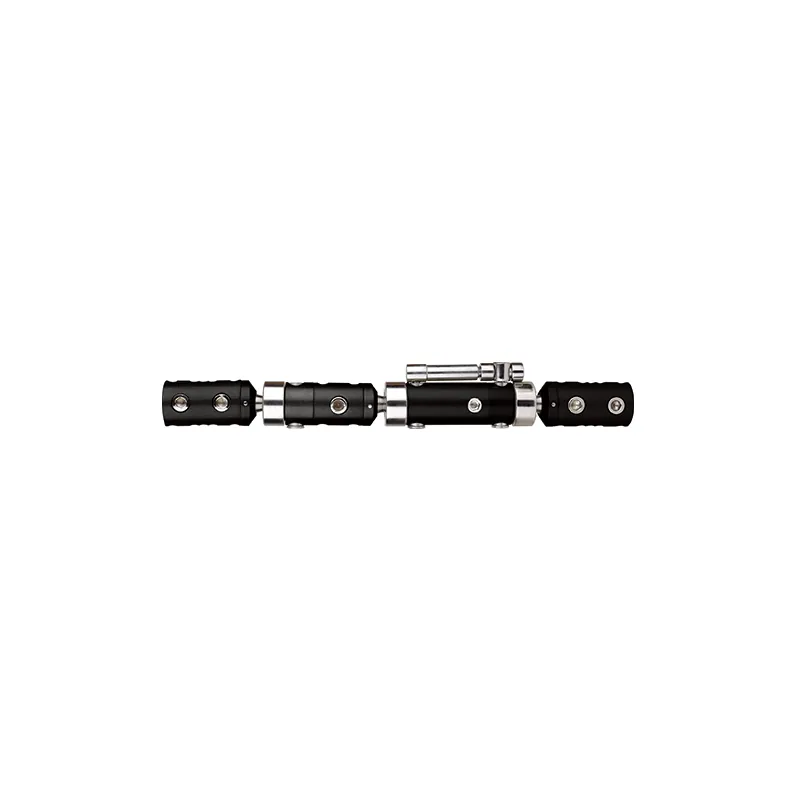
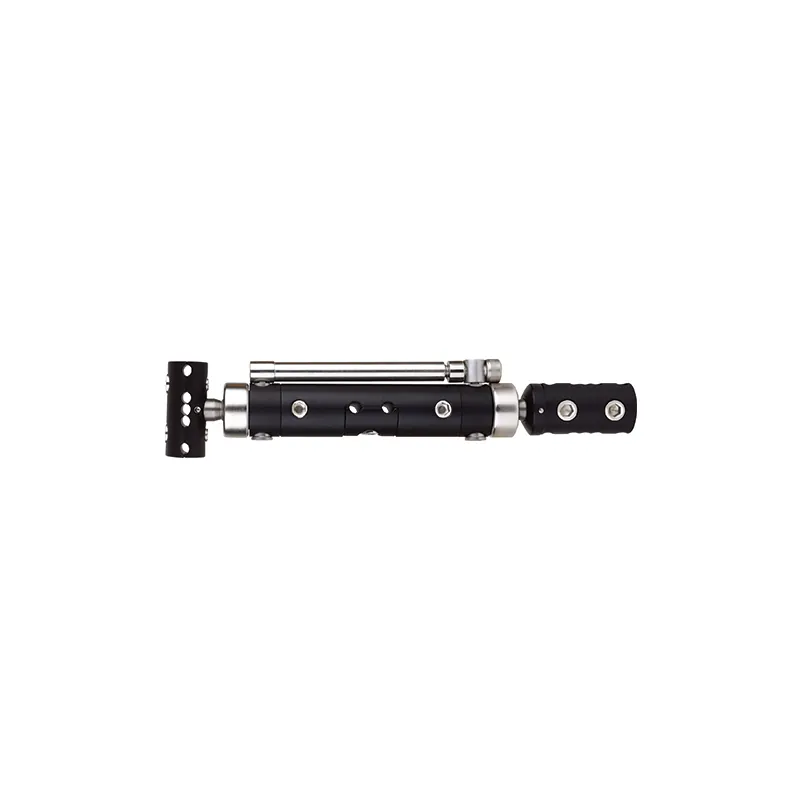
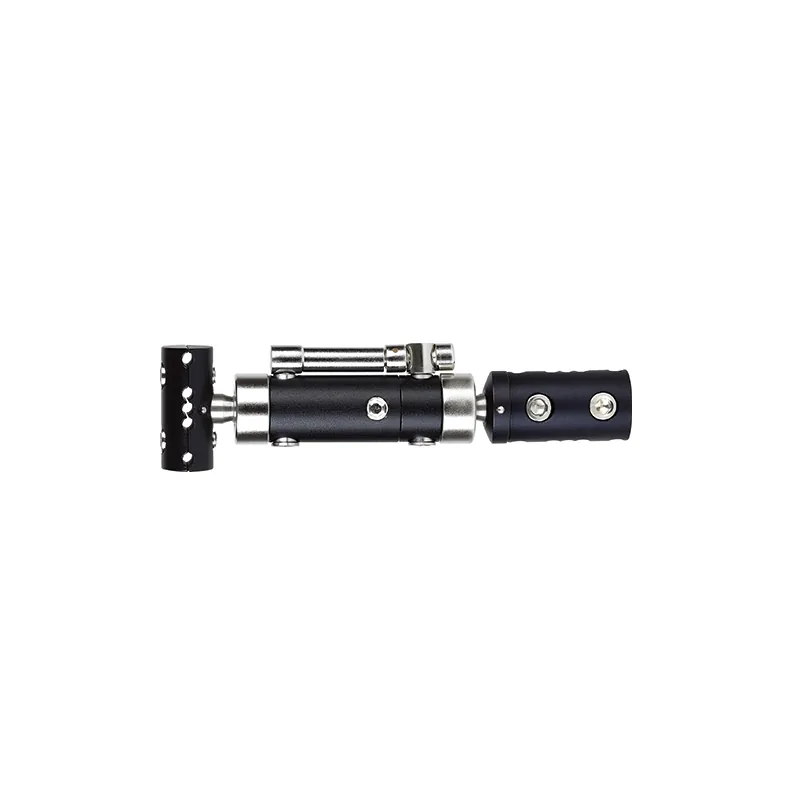
External Fixator System
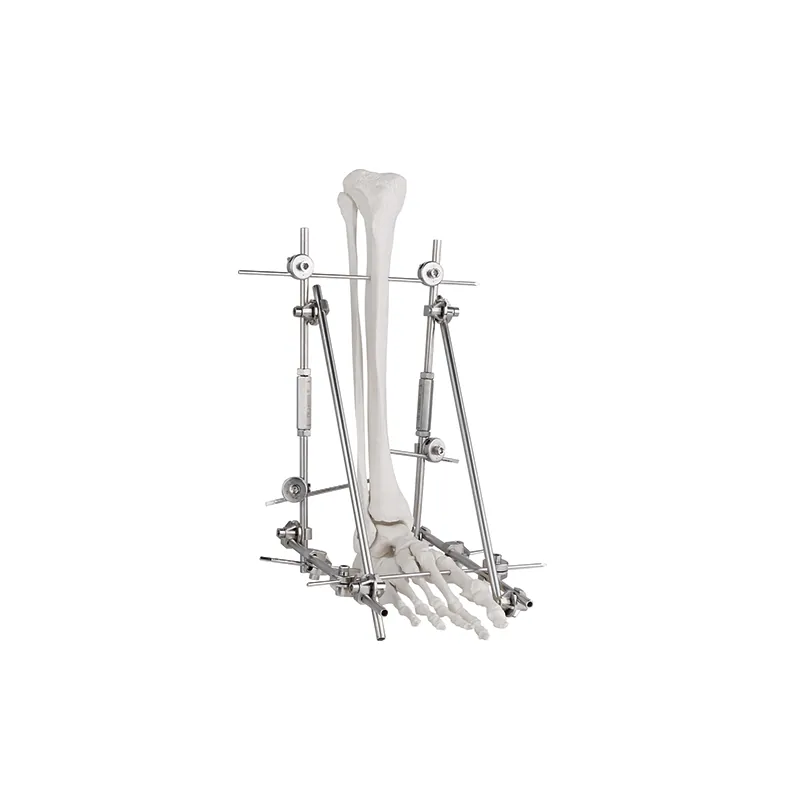
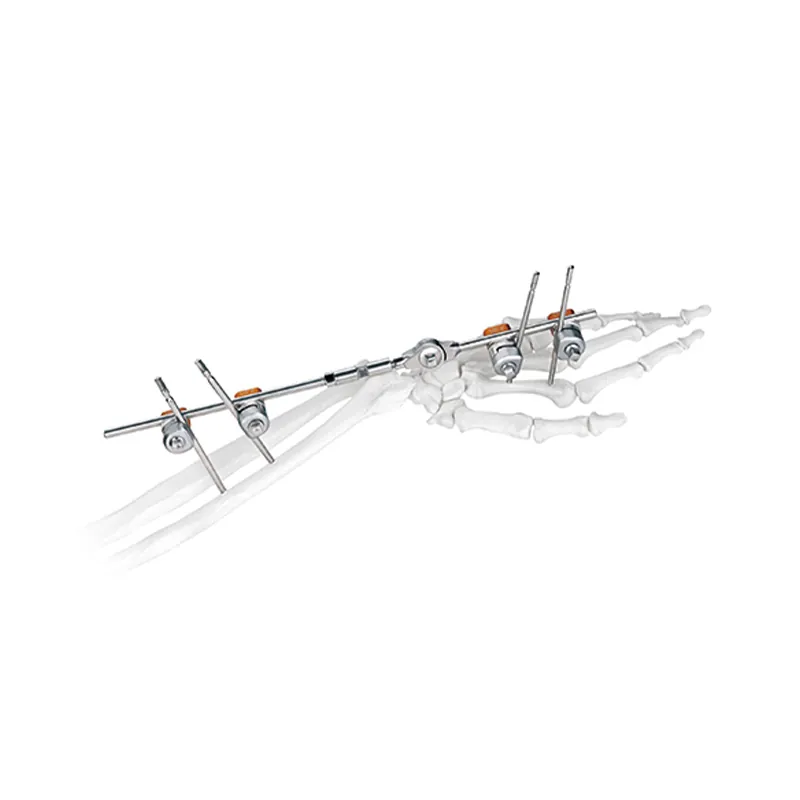
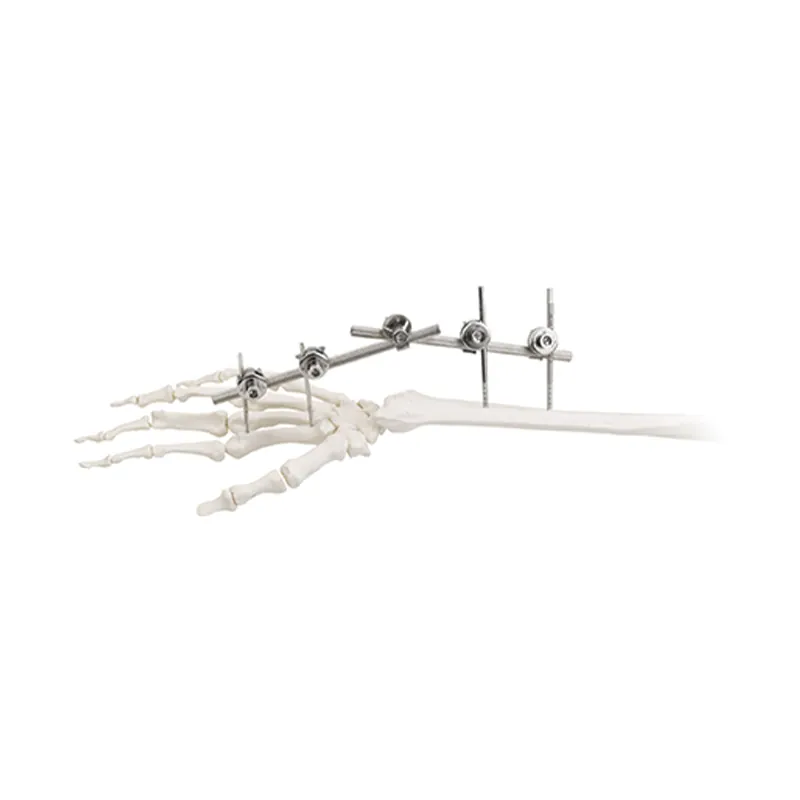
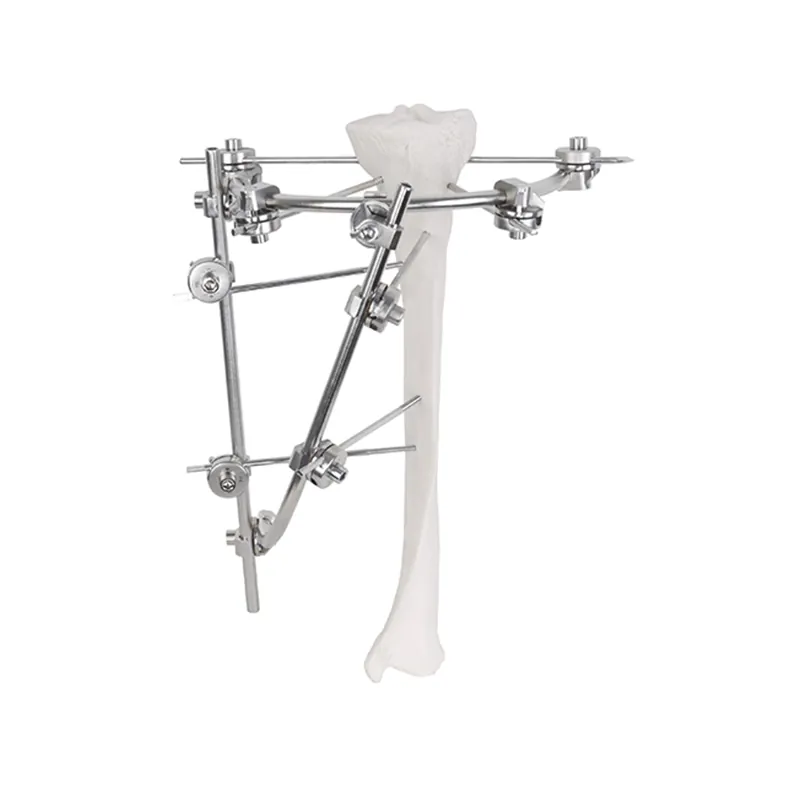
External fixators can achieve "damage control" in fractures with severe soft tissue injuries, and also serve as definitive treatment for many fractures. Bone infection is a primary indication for the use of external fixators. Additionally, they can be employed for deformity correction and bone transport.
Orthofix Type External Fixator System
This series includes 3.5mm/4.5mm Eight-plates, Sliding Locking Plates, and Hip Plates, designed for pediatric bone growth. They provide stable epiphyseal guidance and fracture fixation, accommodating children of different ages.
Ilizarov Type External Fixator System
The 1.5S/2.0S/2.4S/2.7S series includes T-shaped, Y-shaped, L-shaped, Condylar, and Reconstruction Plates, ideal for small bone fractures in hands and feet, offering precise locking and low-profile designs.
Hoffmann Type External Fixator System
This category includes clavicle, scapula, and distal radius/ulnar plates with anatomical shapes, allowing multi-angle screw fixation for optimal joint stability.
Synthes AO Type External Fixation System
Designed for complex lower limb fractures, this system includes proximal/distal tibial plates, femoral plates, and calcaneal plates, ensuring strong fixation and biomechanical compatibility.
Common External Fixator System
This series features pelvic plates, rib reconstruction plates, and sternum plates for severe trauma and thorax stabilization.
Product Advantage
Minimally Invasive, Preserves Blood Supply
External fixation typically involves only small incisions or percutaneous pin insertion, causing minimal damage to the soft tissues, periosteum, and blood supply around the fracture site, which promotes bone healing.
Broad Indications
It is particularly suitable for severe open fractures, infected fractures, or fractures with significant soft tissue damage, as these conditions are not ideal for placing large internal implants within the wound.
Facilitates Wound Monitoring and Management
Since the frame is external, it provides excellent access for subsequent wound care, debridement, skin grafting, or flap surgery without compromising fracture stability.
Adjustability
After surgery, the physician can make fine adjustments to the position, alignment, and length of the fracture fragments by manipulating the connecting rods and joints of the external frame to achieve a more ideal reduction.
Supporting Products
Instrument Set
Instrument Set
Documents Download
Catalog
PDF, 83.45 MB
Comprehensive listing of all products with specifications and features.
Updated: Feb 2024
Surgical Technique
PDF, 23.30MB
Detailed instructions on product usage, maintenance procedures, and safety guidelines.
Updated: May 2025
Feedback
Case1